comment 0

Short Stories: Getting in the Groove

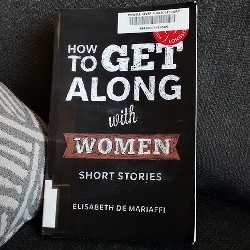
how to get along with women (250x250)My main experience with short stories has been high school English assignments: read this story, answer these questions, write this essay. Thirty years later, I’ve now been giving them a whirl for pleasure—and am finding they’re not how I remember them.

Back then, short stories had a beginning, a middle and an end. Now there seems to be a beginning, a middle…and a drop-off. They’re like trailers for movies you’ll never get to watch: they pull you in, string you along, get you hooked, then, before you’re fulfilled, roll the credits. They’re snippets, rather than whole, satisfying circles.

I’ve also realized that reading a collection of short stories requires more cerebral work than a novel. The first dozen or so pages of a longer work are always the most difficult, having to decipher who’s who and where you are: ages, sexes, settings, relationships, conflicts, etc. Once you’ve placed these things, you’re able to settle in. A book of short stories, on the other hand, has you repeating these efforts again and again. (And sometimes, I admit, a particular story doesn’t give me enough information to be able to decipher these key pieces at all, leaving me entirely at a loss.)

Which ties in to the problem of not being able to put down a short story. Once I begin one, I must finish it. If not, the few pages I’ve read haven’t had time to lodge themselves in my brain. When I next pick it up, I find I’ve lost the thread and have to start over.

Not that I dislike short stories. Now that I’m readjusting my relationship with them, I’m starting to get in the groove. I just read Elisabeth de Mariaffi’s How to Get Along With Women and have two more collections coming in the mail: Heather O’Neill’s Daydreams of Angels and Katherine Fawcett’s The Little Washer of Sorrows.

Over the past six months I’ve actually written two stories myself—the first in adulthood—which I found quite satisfying due to their brevity. Plus I’m about to start my MFA in creative writing and am certain short stories will abound. By the time I graduate, I’m sure to be a pro—at reading them, if not at writing them.

How do you feel about short stories?

Read previous posts.

About the Author

Posted by Galadriel

Hi, I’m Galadriel: blogger, author, reader and resident of a quaint small town in the breathtaking West Kootenay region of southeastern British Columbia. You can also find me on Twitter and Facebook.

comment 1

Hooked on Heather O’Neill

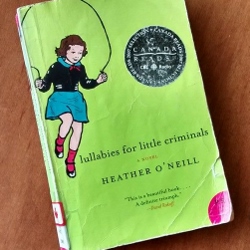
Lullabies for Little Criminals (250x250)When I started reading Heather O’Neill’s The Girl Who Was Saturday Night over Christmas, I was initially turned off. These were not people I could relate to, nor look up to. Although I grew up partly in Montreal, the areas frequented by these characters were areas I’ve done little more than drive through. My neighbours weren’t drug addicts and prostitutes, and my neighbourhood didn’t feature pay-by-the-hour hotels.

Somehow, though, the plights of the characters grew on me. So did O’Neill’s to-the-point writing and abundant and original use of similes and metaphors.

So when I found a well-read copy of O’Neill’s debut novel at the library, I grabbed it. And, as its Canada Reads winner status attests, Lullabies for Little Criminals didn’t disappoint. Written in the same vein as Girl, it took me into the underbelly of Montreal, seen through the eyes of an abused and frequently abandoned pre-teen. Although I couldn’t condone the majority of the girl’s choices, nor understand many of her odd and unpleasant preferences, I could definitely cheer her on.

Being thoroughly hooked on O’Neill’s work, I have now ordered her first short story collection, Daydreams of Angels, looking forward to the seedy situations she will lead me into next.

Have you read Heather O’Neill’s works? Are you a fan?

Read previous posts.

About the Author

Posted by Galadriel

Hi, I’m Galadriel: blogger, author, reader and resident of a quaint small town in the breathtaking West Kootenay region of southeastern British Columbia. You can also find me on Twitter and Facebook.

comments 2

Competitions Rethought

danceprizeA while ago, I wrote that dance is an art, not a sport, and shouldn’t be judged (and offered a similar argument about writing). I have now attended my first dance competition, as a mother of one of the dancers, and have expanded my opinion.

I still believe dance is an art, but the competition itself wasn’t as competitive as I’d thought. It was primarily a venue for the dancers to perform—and dancers should get a chance to perform as often as possible.

While there was then a judging component, the groups weren’t judged against each other, but against a set of criteria (for example, all dancers in a certain category could receive gold, as long as they met the gold standards). They received comments and a report card on how to improve. It wasn’t cutthroat. It wasn’t beating others out. And my daughter said everyone was super friendly and encouraging backstage.

Equally important: the dancers were able to watch each other. They could see how things could be and shouldn’t be done, and set personal challenges for themselves for next time.

In comparison, I feel that writing competitions fall short. Sure, it’s great that you get writing practice, a writer’s own version of “performing.” But then you’re ranked against others, rather than against criteria. Generally, no one receives feedback: if you’re one of the winners, you receive praise; if you’re not, you receive radio silence. The only aspect of “watching and learning” is reading the select winners; everyone else’s submissions tumble into an abyss.

So while the last writing competition I entered gave me writing practice, I came away with little else. My daughter, on the other hand, came away as a dancer with so much more.

Have writing competitions earned your respect? Why?

Read previous posts.

About the Author

Posted by Galadriel

Hi, I’m Galadriel: blogger, author, reader and resident of a quaint small town in the breathtaking West Kootenay region of southeastern British Columbia. You can also find me on Twitter and Facebook.